Monday, January 24, 2011

the giants take manhattan


Followers of this blog know that I'm a die-hard Mets fan who bleeds orange and blue through thick and thin. I grew up in the heart of Yankee country, in the New York City suburbs, always having to explain why I followed that other team. Well, readers, it was quite simple; it was because my father grew up following the New York Giants, who called Manhattan home for three-quarters of a century before skipping off to San Francisco in 1957. Dad eventually became a Mets fan when the National League re-established itself here in New York in the early 60s (rooting for the hated Yankees, of course, was never an option). And so, we were a Mets family. But my father always kept the Giants in his heart, and he'd occasionally share stories from his childhood, of catching the bus from our little town down to Yankee Stadium in the Bronx, and then walking across a bridge into Manhattan to watch the Giants play in their cavernous Polo Grounds, also long gone but not forgotten.

Three years ago I happened upon a newspaper article about a group of old-time New York Giants fans, the kind who still argued about whether Thomson had stolen a sign before his epic shot heard 'round the world, and who sounded a lot like my dad reminiscing about his old team. Not finding much online about the New York Baseball Giants Nostalgia Society, I got in touch with the reporter, who gave me the name of the group's leader, one Bill Kent, of Riverdale, NY. Well, one thing led to another, and I eventually found myself setting Bill up with a listserv so that he could more easily send out notices and share photos and stories with the crew. Since then I've attended a bunch of meetings, sometimes with my father in tow, other times on my own, and I have to say it's always a hoot to hear how passionate these guys are (and it is mostly guys) about the team that abandoned them for sunnier California skies.

And then 2010 happened.

When the San Francisco Giants started getting really good, started looking like playoff contenders, started convincing everyone they might make it to the World Series, a small but devoted group of folks 3,000 miles away from the City by the Bay started feeling the thrill of baseball again. Many of the old timers had remained faithful to the orange and black for all these years. But even those like my father, whose primary allegiance had strayed after the Jints left town, felt a pang of longing for the glory days when, on November 1st, the "fear the beard" crew made it official: the Giants were champions of the world once more.

This weekend, those folks got to be kids all over again. We received word a few weeks ago that the Giants organization had decided to pay tribute to its New York roots by bringing the World Series trophy to the East Coast. Hall of Famer Willie Mays, the Giants' most celebrated ambassador and one of the greatest players to ever don a Major League uniform, thrilled all of Harlem on Friday when he visited a school in his former neighborhood. And the trophy would be on display in midtown the next day for the benefit of Giants fans old and new. In a move of true sportsmanship, the team also invited the Nostalgia Society to a private meeting with not only the trophy, but Giants top brass Bill Neukom (owner) and Brian Sabean (general manager); catcher Buster Posey, the National League's Rookie of the Year; and the "Say Hey Kid" himself, Willie Mays. For guys like my dad, it was like Halloween, Christmas, and your birthday all wrapped into one!

It sure did turn out to be a day to remember. Many of the guys brought their wives and kids, all of whom took turns taking mugshots with the trophy. Everyone was in total awe when Mays came out to greet us, beaming and full of joy. He interviewed Posey for a while and answered questions before signing copies of his biography—which, by the way, the team provided to all of us free of charge. And we heard plenty of stories of old NY Giants memories. It was a moving demonstration of the power that baseball has in bringing people together. While my father and I will continue to hope that the Mets might someday make it back to playoff contention (a girl can dream!), it was truly awesome to have this moment to share with all the other fans in Giants Nation. &infin

Friday, January 07, 2011

carolyn in wonderland: a little video about big things


It's early March, 2007, and planetary scientist Carolyn Porco has just opened the TED conference—a high-profile gathering of the world's brightest thinkers, movers, and shakers—with a bang. Her stirring presentation on the exploits of Cassini-Huygens, a space mission that's been investigating Saturn and its cornucopia of moons since July of 2004, is so inspiring that it goes on to become one of the top-voted talks on all of TED.com. It is, as they say, fantabulous.

Zoom ahead two and a half years to the waning days of 2009. I'm sitting at my desk, furiously scanning Google for a decent photograph of computer pioneer Ada Lovelace for a short piece I'm writing about her life. Before long, I stumble upon an image that makes me smile from ear-to-ear; it's a portrait of a small LEGO person with garments and hair just as Lady Lovelace would have worn them back in 1850. Almost immediately, my synapses start firing. How cool would it be to make minifigs (as these characters are known in the Legophile vernacular) of current well-known scientists and science popularizers? My first thought is to do one of Carolyn, whom I've been getting to know over the previous months. But I envision mini plastic versions of a number of other scientists and personalities as well . . . and thus, an idea is hatched.

Carolyn's minifig, the prototype for what will become an ever-growing collection of "LEGO scitweeps," is finished a few weeks later. But my creative juices are just getting started, and I find myself longing for a greater challenge: a stop-motion movie. I've never done one of these before and wouldn't even know where to begin. Yet it soon becomes my mission to recreate, in as much detail as possible, Carolyn's 2007 TED talk.

Many hours, quite a few moons (including one total eclipse!), and somewhere around 2,500 photographs later, my project is finally complete. The more vigilant among you might notice a few minor goofs (ahemupsidedownshorelineahem). But otherwise, I’m proud to say that this stop-action replica holds pretty true to the original, even down to the faces in the audience! So if you're as excited as I am about planetary exploration, I hope you'll set aside 18 minutes of your day and allow Carolyn's yellow Doppelgänger to, as she so eloquently enchants, take you on a journey . . . And why not check out these behind-the-scenes pics, while you're at it? ∞

Friday, December 31, 2010

the year that was - 2010 in photos

2010 has been a whirlwind year. Here are some of my best shots from the last 12 months! (Click on images for larger versions.) ∞

Brandi Carlile rocking out. Ridgefield. January.

Snowpocalypse I. Brooklyn. February.

Architecture. Barcelona. March.

Avia's street. Masnou. March.

White House bowling alley. Washington. May.

Shuttle engines. Kennedy Space Center. May.

Liftoff. Kennedy Space Center. May. (w/thx to George)

The library. Brooklyn. June.

The eminent cosmologist. Manhattan. June.

Obligatory feline snapshot. Brooklyn. June.

Ice. Rocky Mountain National Park. June.

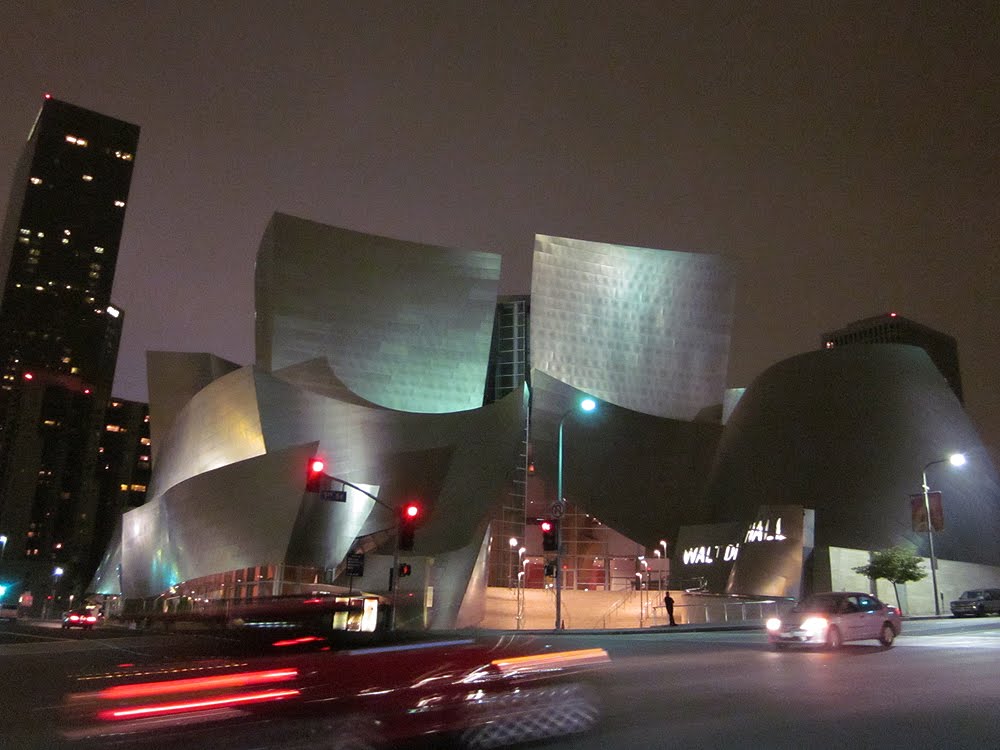
Walt Disney Concert Hall. Los Angeles. July.

Caltech. Pasadena. July.

Hairpin walkway at the Getty. Los Angeles. July.

Michael Jackson party. Brooklyn. August.

A new mark. Mount Monadnock. September.

The Huntington Library gardens. Pasadena. October.

Ceiling of the Civic. Pasadena. October.

Palm trees and condos. Cali coast. October.

Rolling hills. Cali coast. October.

Sea stuff. Monterey. October.

Cal Academy of Sciences. San Francisco. October.

Cargo. Oakland. October.

Snowpocalypse II. Brooklyn. December.

gone in 2010


This is the time of year when we remember those who have left us. The following is a short list of those departed in 2010 with whom I am particularly proud to have shared some time on this planet. Some you may have heard of, some undoubtedly not. All will be missed. ∞

Jean S. Cione: All-Star pitcher with the All American Girls Professional Baseball League of the 1940s and 50s

Geraldine Doyle: Factory worker whose photograph became the basis of the iconic World War II "We Can Do It" Rosie the Riveter poster

Jaime Escalante: East Los Angeles high school math educator whose motivational teaching style inspired the film Stand and Deliver.

Miep Gies: One of the protectors of Anne Frank's family during the Holocaust, and the person responsible for saving Frank's famous diary

William E. Gordon: Electrical engineer who designed, built, and operated the Arecibo Observatory, the world's largest radio telescope

Dorothy Height: A leader and unsung champion of both the American civil rights and women's rights movements

Naomi Prawer Kadar: Inspiration behind BrainPOP, the children's educational website, and founder of BrainPOP ESL, for English-language learners

Dorothy Kamenshek: Former All-Star with the All American Girls Professional Baseball League who provided a basis for the lead character in the 1992 film, A League of Their Own

Juanita Kreps: Pioneering economist and businesswoman who became the first female Secretary of Commerce under President Carter

Benoît Mandelbrot: Innovative mathematician who developed the field of fractal geometry

Brian Marsden: Astronomer who directed the Minor Planet Center and coordinated celestial discoveries made around the world

Robert Macauley: Connecticut businessman who founded AmeriCares, one of the largest private health-care charities in the world

Paul the Octopus: Famed cephalopod who became renowned for his ability to correctly predict the winners at this year's FIFA World Cup

Sylvia Pressler: New Jersey judge whose most famous ruling gave girls the right to play Little League baseball

Allan Sandage: Prolific cosmologist whose observations helped establish the currently-accepted age and fate of the universe

Bobby Thomson: Major League outfielder whose "shot heard round the world" propelled the New York Giants to the 1951 World Series

Theresa Weinstock: Someone without whom I literally would not be here: my grandmother!

George C. Williams: Evolutionary biologist who contributed major insights into the workings of natural selection

Howard Zinn: Historian, writer, and progressive thinker whose A People's History of the United States offered an alternate view of American democracy

Thursday, December 09, 2010

on politics: a picture speaks a thousand words


I had zero intention of writing a blog post today, but this photo wouldn't let me go. It so perfectly encapsulates the serious frustration I've been feeling toward our government this year. It was taken moments after a bill to extend health benefits to 9/11 responders—the very "heroes" that members of the Grand Old Party have invoked time and again in the wake of that tragic event—was blocked by Republicans from entering a full vote in the U.S. Senate. At left, New York's junior Senator Kirsten Gillibrand seems utterly defeated, while her colleague and mentor Charles Schumer, NY's senior Senator, tries to console. One can only imagine the words between them at that moment. I'm reminded of that scene in Lost in Translation...you know the one. It doesn't matter what he said to her, and you don't need to know because you get the gist.

Sadly, it was just the first major blow for the two, and especially the junior Senator, on this day. Hours later, the Senate GOP blocked another vote, this time on a bill that included a provision Gillibrand had put her full force behind, a repeal of the military's discriminatory Don't Ask Don't Tell policy. Even the recently despicable Joe Lieberman of Connecticut had gotten behind this one! And yet most of the rest of the Senate's conservative wing refused to set aside "procedural niceties," as one blogger so eloquently put it, to ensure equal rights for all our service men and women. W...T...F?

But back to the picture. Schumer, the sage elder who you can tell here has been around the Congressional block a few times, may be more adept at this point at swallowing defeat, and it's heartwarming to see him encouraging his counterpart to keep her chin up. Gillibrand is a young, energetic Democrat, elected to the Senate just last month after serving two years in the seat Hillary Clinton vacated when she became Secretary of State. I can't help but feel that Gillibrand in this photo represents what most Democrats are feeling these days: growing disappointment and disillusionment in the wake of what seemed so promising back in 2008. To be sure, it's nothing new for me to get annoyed with Republicans. And I freely admit that an unfocused Democratic caucus shoulders a certain amount of blame for recent events. But the GOP obstructionism has gotten totally and completely out of hand. I recently saw a blog post explaining how today's Republican strategies closely resemble those of Cold War-era Soviets. They include:
•Taking extreme starting positions
•Employing emotional tactics such as exasperation, or getting angry and storming out of the room
•Viewing concessions by the adversary as a sign of weakness
•Delaying giving concessions and then only giving very small amounts
•Paying no attention to deadlines
In other words, they're being little brats! And hypocritical little brats at that; see 2:31 in this short video on GOP obstructionism. The poster went on to quote (a hardly liberal) David Brooks:
"[My] problem with the Republican Party right now ... is that if you offered them 80-20, they'd say no. If you offered them 90-10, they’d say no. If you offered them 99-1 they’d say no. And that’s because we’ve substituted governance for brokerism, for rigidity that Ronald Regan didn’t have."
Sigh. Anyway, as I tweeted earlier, hang in there, Senator Gillibrand, and keep fighting the good fight—even though I get that it might feel right now like you're smacking your head against a slab of cold concrete. To put things in a completely random perspective (and I know you're probably a Yankees fan but go with me for a second), this is sorta how we Mets fans feel every year. We deal. We pick up. We carry on and try again tomorrow. By the way, I hear you turned 44 today...here's hoping a few birthday drinks were able to numb the pain. ∞

Photo by Drew Angerer for The New York Times

Wednesday, December 01, 2010

hum for the holidays

Wait, is it December again already?!! My, how 2010 has flown by. Well, I'm not quite prepared for the holidays just yet, but I've been cruising for some fun and unique winter songs, and I think I've come up with a set that you'll fancy, entitled Brooklyn December. (In case you missed my previous two holiday mixes, behold Brooklyn Xmas and Brooklyn Holiday.) As in years past, I've focused on indie/alternative tunes and interspersed various soul, country, and electronic/pop ditties. This year I came up with about twice as many songs as I could hope to fit into one mix, so you'll have to wait til next year for the rest ;) Enjoy! &infin

Brooklyn December mix | Listen on Spotify | YouTube Playlist
Father Christmas - The Kinks
Look Out the Window - Gene Autry feat. Rosemary Clooney
Fallen Snow - Au Revoir Simone
Ain't No Chimneys in the Projects - Sharon Jones and the Dap Kings
Christmas Tree - Lady Gaga feat. Space Cowboy
Carol of the Bells - Straight No Chaser
Christmas - Leona Naess
Santa Claus is Coming to Town - Jackson 5
LeRoy the Redneck Reindeer - Joe Diffie
It Came Upon a Midnight Clear - Sixpence None The Richer
Have Yourself a Merry Little Christmas - Francesca Battistelli
Forget December - Something Corporate
Angels We Have Heard on High - Relient K
O Holy Night - Weezer
Christmas Ain't Like Christmas Anymore - Kitty Wells
Jag Vet En Dejlig Rosa - Robyn
Winter Song - Sara Bareilles & Ingrid Michaelson

Sunday, November 21, 2010

rosalind franklin gets her closeup


This weekend I went to get a chest x-ray for a minor but persistent lung infection that doesn't seem to want to go away. While at the hospital, I chatted up the radiologist, a pleasant and efficient man who explained the procedure while securing around my waist a heavy lead sheet. I knew that the sheet was meant to protect my reproductive organs from potentially harmful effects of the radiation I was about to receive. So I quipped that I'd just seen a play about Rosalind Franklin, and that I was all too happy to don the bulky shield if it meant keeping my ovaries in good, working order.

"Rosalind Franklin?" the radiologist repeated quizzically. "Who's that?"

It's a question I'd expect from, oh, pretty much anyone without a significant science background. But I was rather shocked and dismayed to hear it from someone who not only works in the very field that Franklin contributed so much to, but who utilizes every day the same stuff that made Franklin's historic career—and that led to her untimely death. And so, as playwright Anna Ziegler did so eloquently in her recent production at the Ensemble Studio Theater in Manhattan, I couldn't help but muse, in nothing more than a hospital gown and leaden sash: What if?

Photograph 51 tells the story of Rosalind Elsie Franklin (pictured below), a British physicist and biochemist who made major insights into the molecular structures of coal, graphite, viruses, and the hereditary molecules DNA and RNA. In particular, the play centers on her contributions to the discovery of the structure of DNA, which tantalized scientists until the April, 1953 publication of three papers in the journal Nature. These papers, one of which was co-authored by Franklin, effectively elucidated the biological mechanism of reproduction—or as many have dubbed it, the secret of life.

Though Photograph 51 is billed as a fictionalized account of the personalities surrounding the discovery of DNA's structure, Ziegler clearly did her homework. Much of the information presented in the play has been documented as fact: In 1951, Franklin went to work with Maurice Wilkins at Kings College London on x-ray photography of the structures of biological molecules; Franklin and Wilkins formed an icy relationship, resulting in less of a professional partnership than a simple sharing of physical space at the Medical Research Council's biophysics unit; For two years, Franklin worked tirelessly, with the help of her grad student Raymond Gosling, to create x-ray diffraction images of DNA in an effort to uncover its form; Wilkins and rivals James Watson and Francis Crick would ultimately share the glory for their work on DNA's double-helix structure, while Franklin's contributions were largely ignored; It later became known that Watson and Crick had, unbeknownst to Franklin, secretly been shown one of her unpublished photographs, which led directly to their determination of the correct DNA structure.

While the play raises many questions about how and why this all came to be, Ziegler makes no apologies for Franklin's apparently prickly personality and the role it may have played in history's outcome. It was refreshing for me to watch actress Kristen Bush in the lead role, not only because she nailed the repression of Franklin's inner conflicts, but because despite all that I'd ever read about Franklin in books and articles popular and scientific, I'd never really envisioned how her contrary comportment might really have come across. I'd certainly known that her reputation was far from that of a cuddly teddy bear, but sometimes it really takes hearing the words and seeing the facial and body expressions to appreciate what a person was truly like in the flesh.

It's tempting now to consider what Franklin—who died of ovarian cancer at 37, just five years after the DNA structure was confirmed—might have thought of her legacy today. In some sense, it would be logical to conclude that she'd have been embarrassed by the whole thing and would have urged people to accept what happened and move on. But I can't shake the feeling that she would have been pleased at having become a feminist icon for women who, half a century later, still face uphill battles in being accepted as equals in the scientific world. One might also surmise that Franklin, at least privately, would have felt vindicated for being considered a pioneer after all the criticism that swirled around her personality and methods. In one of Photograph 51's early scenes, Wilkins fails to notice how hurt Franklin is that he's decided to lunch in the men-only common room on her first day at the lab. She feigns indifference but is obviously fuming inside, not only at the unfairness of this discrimination but at the clear slight by her new colleague. Yet just when you think she's going to let it pass, Franklin comes straight to the point about her displeasure upon Wilkins's return from lunch. She had no intention of letting it go, we find out . . . so why would she let a little thing like her legacy go unchallenged, either?

At the end of the day, of course, all we can do is speculate: What if she'd been more open to sharing her work? What if she'd been less methodical, more of a risk taker in the lab? What if she'd been easier to work with, more gregarious? What if she'd lived at a time when women were more accepted as scientists? What if she'd known about the dangers of radiation? What if she hadn't died before the Nobel were awarded for the discovery of DNA's structure? If any one of these factors had been different, might my radiologist have known who I was talking about when I mentioned Franklin's name the other day?

As her character opines in the play's final scene, I suppose we'll never know. What I do know is that I'm elated that Anna Ziegler and director Linsay Firman decided to bring Franklin's life to the stage. And I can only hope that Photograph 51 will be replicated in theaters everywhere, so that the world might ponder the same questions of biology, personality, history, happenstance, and the pursuit of knowledge. ∞

Monday, November 15, 2010

felons and felines

William Minnick is a wiry-haired inmate at the Indiana State Prison, a maximum-security correctional facility about 50 miles east of Chicago. He's been behind bars since 1982, when he was convicted of assaulting and killing a young woman in her home. Minnick knows a thing or two about the darkness of prison life; he was on death row for many years until his sentence was stayed in 2004. Even then, he remained confined in a small cell with little to live for.

Enter Mr. Magestyk, Minnick's slightly overweight and clearly pampered cat. The pair became fast friends in 2006 when Minnick, now 47, adopted Magestyk (pictured below) as part of a pilot program to allow inmates to care for homeless cats. Today, Minnick and Mr. Magestyk are inseparable. By all accounts, the introduction of this little ball of fur into Minnick's cell has given him a new lease on life.

I learned about the Indiana State program after coming across a fascinating blog post detailing one woman's quest to discover how cats are making life better in a place where 70 percent of convicts are there for murder. Diana Korten, who not only visited the prison but also interviewed corrections officers and inmates there about the program, found that aside from giving inmates something to love and be responsible for, the cats have mellowed them out considerably—which means fewer incidents of violence for officers to deal with.

Not that the cats haven't instigated a few rumbles... In one case, an inmate was found murdered after he had allegedly spit soda on another inmate's cat. Another time, several convicts put out a contract on the life of whomever was responsible for killing the cat of a particular prisoner. The cat killer was never found, but the fact that his own life was threatened illustrates how closely the inmates at Indiana State have bonded with their felines!

Simply put, this program appears to be a blessing for a population that doesn't have much else going for it. And considering there are so many cats in need of homes, it seems like a great system to try out in other prisons across the country. Some might argue, of course, that allowing prisoners to own cats or other animals is a pleasure they shouldn't be afforded, especially when the crimes they've committed are particularly heinous. But it's my belief that convicts should be given some way to grow as people while they're behind bars. And if a prisoner can find some humanity with the help of a pet then why shouldn't he have that opportunity? It should be noted, by the way, that inmates in the Indiana State Prison program have to pay out of their own pockets for the upkeep of their cats—which means for most of them that they have to work to earn money for food, toys, and medical expenses. So the kitties give their owners that extra incentive to stay on task, too.

Anyway, if you're interested in learning more, here's a short piece detailing some of the history of the Indiana State Prison cat program, and an article on pet therapy for prisoners. You can also check out the video below on cats in prisons, including at Indiana State (Minnick and Magestyk make an appearance). &infin